Cloud observation
Cloud pareidolia: seeing shapes in the sky
Cloud pareidolia is the experience of recognising a familiar shape in a cloud—an animal, face, object, character, or form that the cloud only suggests.
Why clouds are so suggestive
Clouds combine recognisable contours with constant uncertainty. Rounded volumes can resemble bodies, gaps can read as eyes, and an edge lit by the sun can become a profile. Because the shape is incomplete, perception supplies a possible whole.
The same cloud can change as it moves, or appear different after a small change in camera angle. Cloud pareidolia is therefore both visual and fleeting.
Animals, faces, and imagined creatures
A cloud can support many kinds of personal interpretation. These categories describe perception; they do not mean that a subject objectively exists in the cloud. Common examples include:
- animals suggested by a head, back, wing, or tail;
- faces formed by only a few light and dark regions;
- hearts, vehicles, landscapes, or invented creatures.
CloudMuse
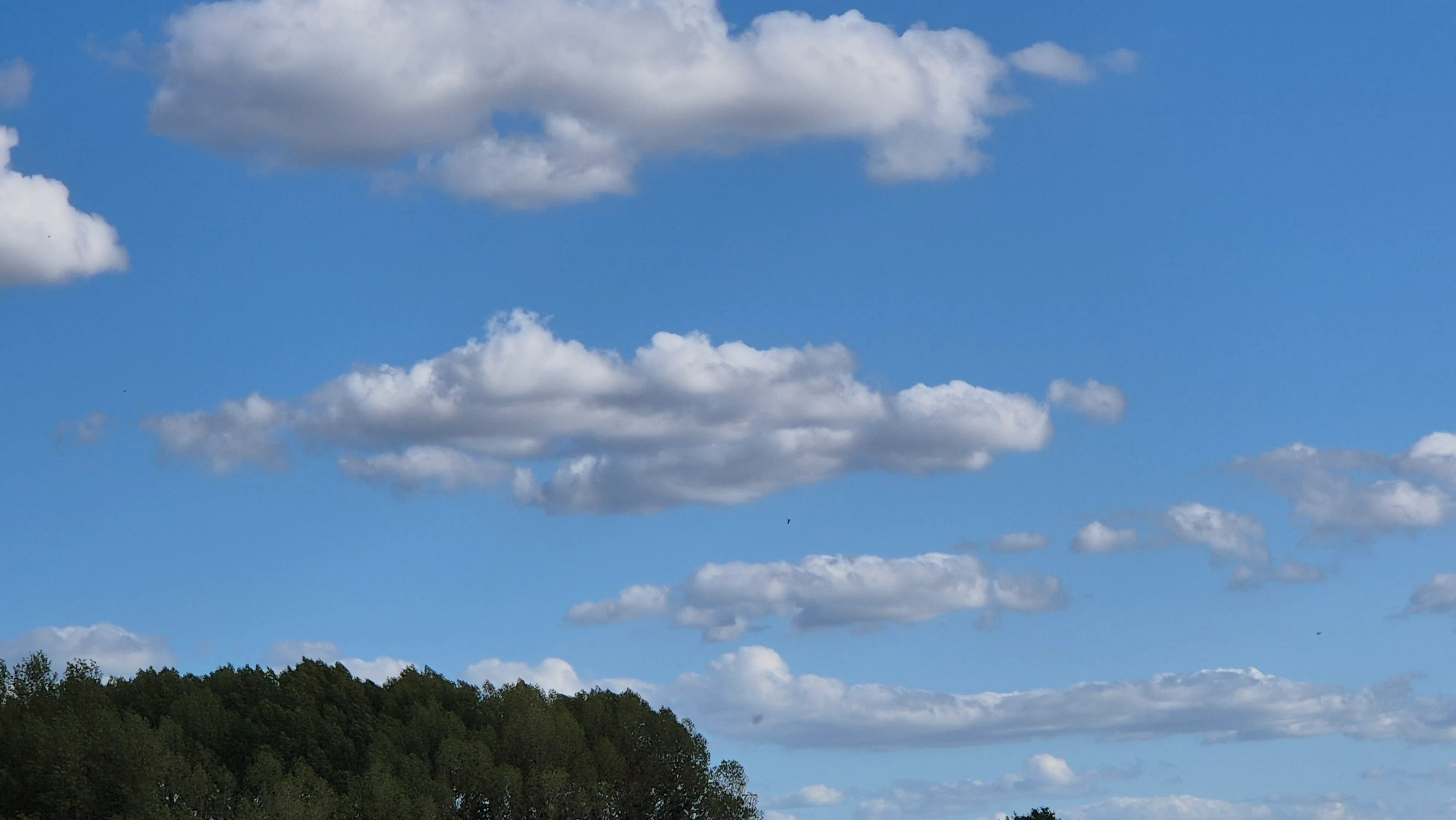
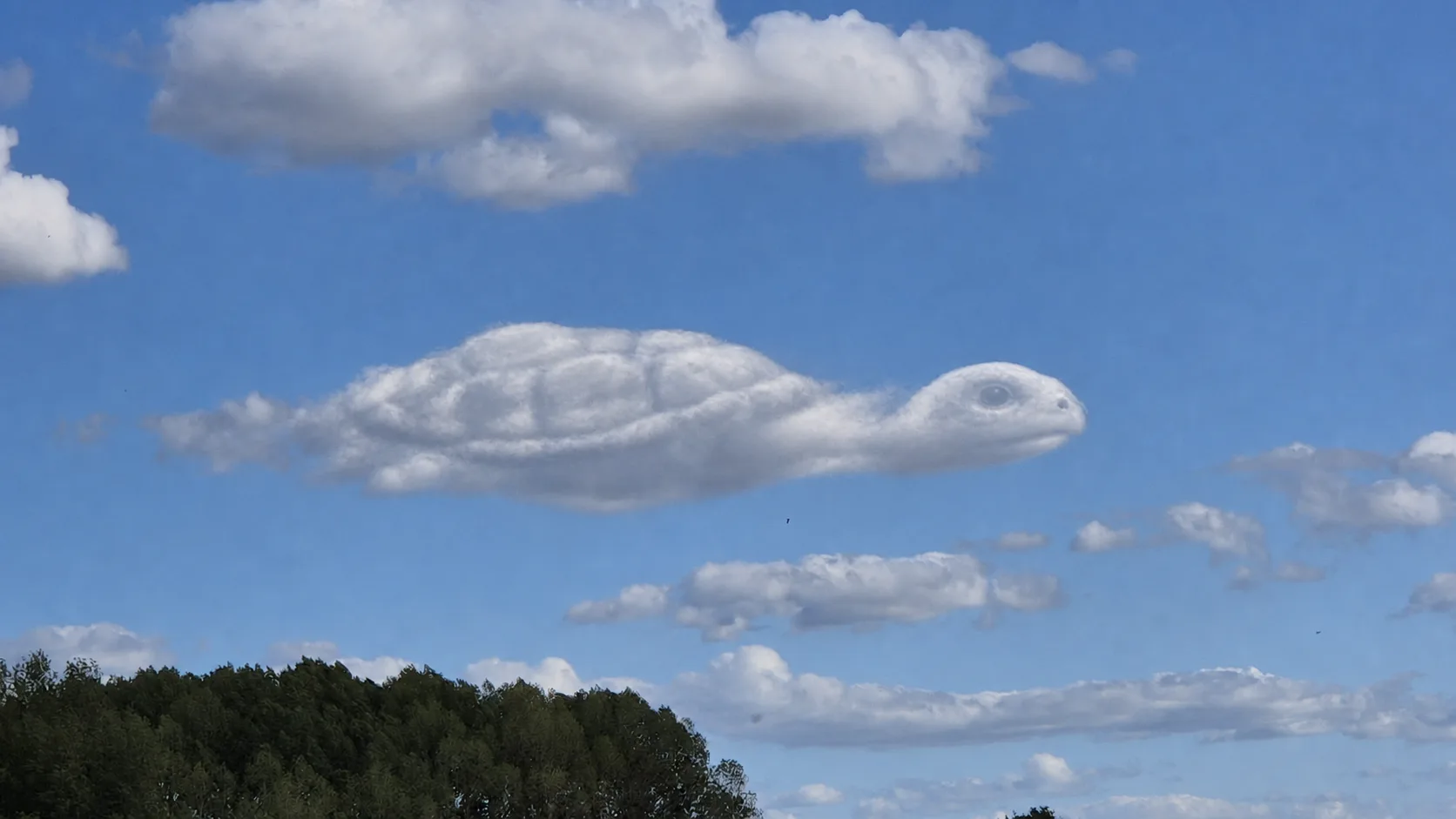
When a long cloud suggests a turtle
Here, the observer interpreted the low, elongated silhouette as a turtle. CloudMuse revealed that reading while preserving the horizon and overall cloud shape.
Different viewers, different skies
Past experience and attention influence what stands out. One observer may notice a sheep while another sees a mountain or nothing specific at all. Sharing the interpretation is part of the delight: the cloud stays the same while the suggested story changes.
From perception to CloudMuse reveal
CloudMuse begins after you have noticed a subject. You photograph or import the sky, select the relevant cloud, and describe your interpretation. The reveal is designed to make that chosen subject easier to share while retaining the identity of the original cloud.
CloudMuse does not position itself as an automatic cloud-shape detector. Human imagination leads; the app gives it a visual form.
A simple way to observe
- Look at the full silhouette before focusing on details.
- Rotate the image if the orientation feels unclear.
- Notice negative space as well as the bright cloud mass.
- Capture the cloud promptly: wind and light can reshape it quickly.
- Describe what you see in your own words—there is no required answer.
Frequently asked questions
What is cloud pareidolia?
It is the perception of a familiar subject in the ambiguous shape or texture of a cloud.
Why do I see animals in clouds?
A partial outline, body-like volume, or feature can match a familiar animal pattern, and perception completes a possible interpretation.
Can two people see different things in one cloud?
Yes. Cloud shapes are ambiguous, so viewpoint, associations, and attention can lead to different readings.
Does CloudMuse choose the shape?
No. You decide what you see and describe it; CloudMuse reveals that interpretation visually.